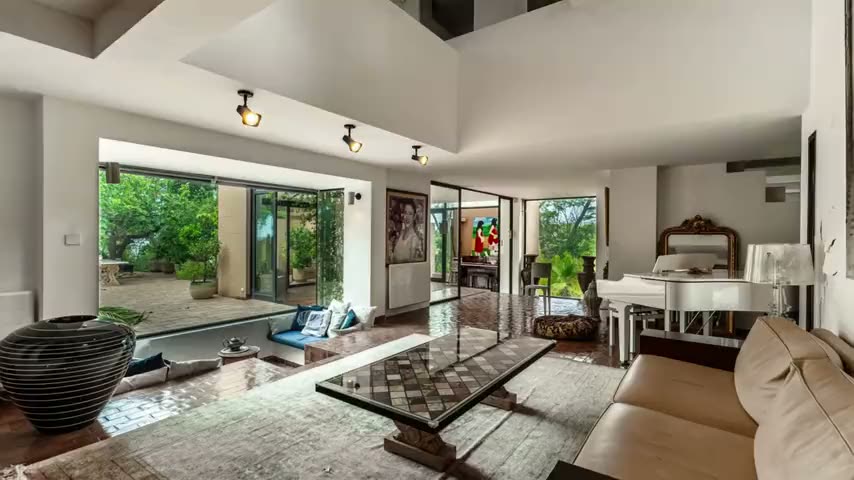
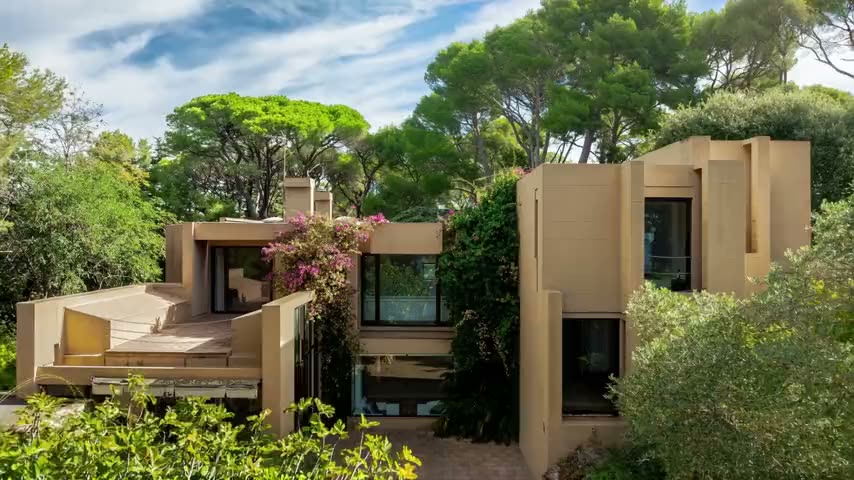
As far as the photos allow
The camera moves forward as long as the photos show what there is to see. Beyond that, the film cuts, without inventing what comes next.
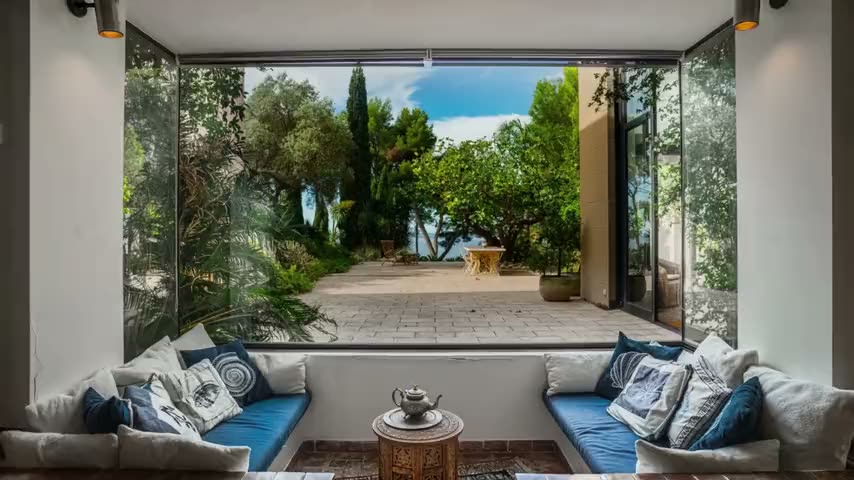
A generative model can always produce the next frame. Ask it to move the camera forward in a room and it will. If the back wall was never photographed, it will produce one. If the door on the right leads to a room nobody has shown, it can go through it and show a room. The image will be clean and plausible, with nothing to guarantee that it is true.
So we ask ourselves the same question for every clip: how far can the camera go while showing only what the photos already show? The answer changes from one room to the next, and from one listing to the next.
What a camera move requires
A photo is taken from one point, in one direction. As soon as the camera moves, the viewpoint changes. When it moves forward, it reveals details the photo showed small and far away. A pan brings into the frame what lay to the side. If it goes through a door, it arrives in a space the photo only showed through the opening.
So every frame of the film has to come from somewhere. It is documented when the starting photo already contains it, or when another photo in the listing shows the same part of the room from another angle. If no photo shows it, it would have to be invented.
Where the photos stop
The photos do not show the corner of the room behind the photographer, or what is behind a sofa. Nor do they show the room beyond a half-open door, or the part of a terrace hidden by a wall. Taken at eye level, they often cut off the ceiling.
A model that pushes the move beyond these limits has to fill the image. It fills it with what is likely in a room of that kind: a wardrobe where there was a window, a second door that does not exist, or a ceiling higher than the real one. These images remain plausible, but the home they show is no longer the one the buyer will find at the viewing. An agency will have to justify such a film to the buyer.
Linking, or cutting
When the move cannot go further without inventing, the film still has to show the property. It does so by linking the photos that can be linked, and cutting elsewhere.
Two photos can be linked when the camera can move from one to the other while showing only what they show: the same room seen from two angles, or two rooms with a visible passage between them. The clip then starts on the first photo and ends on the second.
Two rooms can also follow each other in the tour without anyone having photographed the passage between them. The film then shows the first, then the second, each with its own move, without going through that passage. The edit joins them, and the order of the clips follows the layout of the home as the listing shows it. The viewer understands that one room leads to the next, without seeing a corridor that was never photographed.
The film of a listing: a continuous move where two photos can be linked, a cut elsewhere.
The two combine in the same film, according to what the photos allow. A room photographed from several angles can be travelled through. The way out to the terrace, which nobody photographed, becomes a cut.
Who chooses the move
For each pair of photos, the process decides whether it can link them, or whether the film has to cut. This choice is not offered to whoever orders the film, for two reasons.
They know the property and look at the photos knowing what lies around them. Their memory fills in what is missing, so they do not see where the photos stop. A setting that let them lengthen the move would therefore lead them to ask for an invention without knowing it.
Nor, across a whole catalogue, can anyone make this decision listing by listing, clip by clip. So the rule sits in the process, and it applies in the same way to the first listing and to every one after it. The client defines their signature: their logo, their rhythm, their music. Faithfulness to the photos is not one of their settings.
Why we refuse to invent
A film that invented a little would often be longer, and the camera would go everywhere without a cut. Ours shows only what the photos already showed. An agency can therefore publish the film in place of the photo without fearing what the visitor will find on site.
The length of the moves depends on the photos. A listing that shows each room from several angles allows longer moves, and continuous passages where visual landmarks link the rooms. A listing that shows each room only once, from the doorway, gives fewer moves and more cuts. Either way, the video tour describes the same home as the viewing on site.
Whole films, made from the photos of real listings, are on the Examples page.